
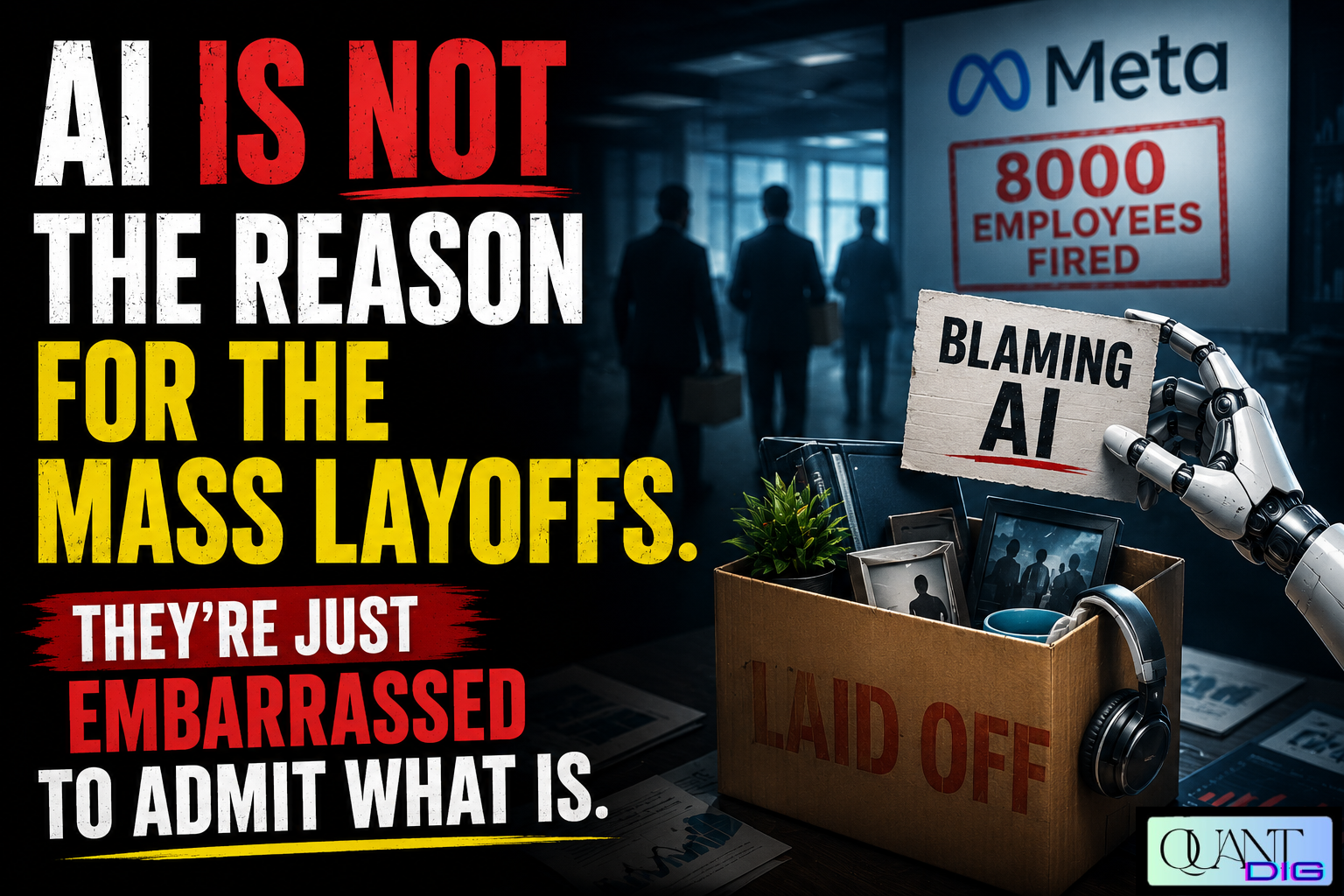
You are currently viewing AI is Not the reason for the mass layoffs

AI is Not the reason for the mass layoffs

The Layoff Narrative

Why AI Became the Perfect Corporate Excuse

https://images.openai.com/static-rsc-4/Sj4Djd7MHaRxsxS0jg7Yl5sZh0NHReRobdvnBz5YTyvWQ8dBQgwbt4sx8VaAh67_lNCwUrmTmooOSm2pagbo10UOZkHtgB8dWmwerKYxfdSfXQzYVjsweIncRHmzji5AvaX1r2AyYFRCYuOIr_idXR0qlBbE3U-qB13fOXAtfhvxf8CHQvWaSj89QRy_sFaS?purpose=fullsize

Introduction: The Convenient Explanation

Over the last two years, a pattern has become impossible to ignore.

Major technology companies announce:

  • Mass layoffs
  • Workforce “optimization”
  • Organizational restructuring
  • Efficiency programs
https://images.openai.com/static-rsc-4/cEVmGcHc5krrlY6jpt1_8j5vZfvYlD8ioVBHrDWVxAK1PaoxT4Y4uVRTGpmpRIL4QMOj9E_aRxkm3HcGDnOH5HxdoaI9-w2z98mppojZUGtfwjy6-Q7JIkTg6Q5J5zvEkwjPNHWbJUZ28JOk52NgOAtGXY2g_lTyBZA0_52_PSv553LGxN2OJ2XTPaYG6J1A?purpose=fullsize

And increasingly, the explanation sounds familiar:

“AI is making teams more efficient.”

The implication is clear:
AI increased productivity so dramatically that large parts of the workforce simply became unnecessary.

But the reality may be far more complicated.

At QuantDig, we believe AI is often not the true reason behind modern layoffs.

It has become the narrative that makes difficult financial and organizational decisions easier to justify publicly.

https://images.openai.com/static-rsc-4/60kJ9TouFqoVjpm4NCjPnztVbFBl65yZiyXlfOxkFZ-vRVZYqDb7AyLVhHeNzBLFg4UFfaF1vEgpmIZyPrERf0GOapkXakXOmJefESiCv9q0_jdU5CuJKwyZWwssLt4KORcEWIdUnK-OfgPX1KpraEcIe8LfF-6WjfH0PgXupb0CIrHUHCY5YH9AqwvRFcai?purpose=fullsize

The Rise of the AI Layoff Narrative

https://images.openai.com/static-rsc-4/hPb1h28ZDB6_dbSwdW8Bnyyr9wIbobvkajOq9KyGLQwJOL6B9AaooMVi1MFLldjnJqkiiZO1u8z9izS6Feqdpse-YgUYmwzcrvpp8PSC4sVs7O2XTuvP_GTl88Dly1A9VBR5Z39UXSsmlM0xD15-Paly5Ls24Dro6ZAo-tPJZl-V2GD5ITaWCez1vNpE5lN0?purpose=fullsize

The AI narrative works because it sounds inevitable.

It creates the perception that:

  • Technology evolved faster than employment structures
  • Automation naturally reduced workforce requirements
  • Companies are simply adapting to the future

This framing shifts layoffs away from:

https://images.openai.com/static-rsc-4/TqGg3spAX7ghfCwWGTU7Y7tBwX3Av2gAMvMj9A0eiBDNUO5e5F7TyrsFlqAUXbR5ZfdqUH7S2jrAyDCALnQyxo78so1Zctp6Tva2DQmu5maUAqs3u9vMx0kzmgBo5-m2FtcvACNOoGpNP7Vi7NL4SK5W4inNu34GsX2qpBILy7K5tPfMTktavNVjAh6JQRbJ?purpose=fullsize
  • Leadership decisions
  • Financial pressure
  • Over-hiring cycles
  • Investor expectations

And places responsibility on technological progress itself.

AI becomes not just a tool — but a justification mechanism.

https://images.openai.com/static-rsc-4/mqxqYXnaH045JnzrhccLKjg4wC40CJ8ePCRfIHnPR-KaKwWi2UxkezbA5xOudrEMBjHv9nTS6hkd9jbFBlG5v1nGSbBSsW81TSi35_D610effCcZuhs4f6Go81nAWqbBUAHyPBagk6dPAbMAV9zD53g2lf3Zc9pwwHEFo4DB7fSB4-RGhYNKJxN-knZ7diOe?purpose=fullsize

The Over-Hiring Era Nobody Wants to Discuss

https://images.openai.com/static-rsc-4/IPE-rN_lHPCCiOE-Qr3dzjUtWy-RpzS5OsrjmDR00YwKKGZw8rFFWLU2hdCOf7RN2AE4ft4kxr7Jot7I7G7MegkvRdQJn2vLQpEUnNMTyPu34lwr-0YXvF7KJgMUOarr3-zOM6rn3kiVYChm14cO2Kfml4_ZGPoBo7Op9NY1Vs_StyLi9wb457pQlfw9RuN6?purpose=fullsize

During the post-pandemic technology surge, many companies hired aggressively.

Growth projections assumed:

  • Permanent digital acceleration
  • Endless low-interest capital
  • Continuous user expansion
  • Long-term remote demand growth
https://images.openai.com/static-rsc-4/t0dyJ8WoAr5D6LLL0uLMFwif_6IRsrFeMdx3tk_6unVGOHIQLlfznXDlOV9eoUZXuNHdZUjG2aJ62GzCNqKLJKD-CtphJzzDo-HiWkzE1KBmISwHfunNxoAJ0G77XxuQhAzygWSJjfy7FUIxROeJYHWEPrvXNb789BZvwgsYWGj7jPyji-h-rCDzgjoJmd7y?purpose=fullsize

Teams expanded rapidly:

  • Product divisions multiplied
  • Management layers increased
  • Experimental initiatives scaled prematurely

In many organizations, hiring outpaced operational necessity.

https://images.openai.com/static-rsc-4/FU1I9U24APszSaLRoV1XyZjWz5hNj2ivEaD81ewV1za1z1PF9t44hG7rQQKn_9vLtC2Up5HJjI1cN-ejzAnf7x34TpCbgmA6NIRzPEE4JQ2V9vfqqIJIOePfjZfFenTmcJBFLK9hZQ0Cg7vPRvRrKTZcImBkopUONkin_2vdWSunJeFBcayxS7mOjRxjaHbi?purpose=fullsize

The correction now happening may be less about AI replacing workers — and more about companies correcting expansion assumptions that no longer hold.


AI Increased Visibility Into Redundancy

AI is not entirely unrelated to layoffs.

But its role may be misunderstood.

In many cases, AI did not suddenly eliminate valuable work.

Instead, it exposed:

https://images.openai.com/static-rsc-4/0dzP2Oz2vBuOmIMGQhsDvat6h2CCU95-Td8IySEx2DyK1cmrrBy9Bb2bPw4EXs4fjmFcSSzi8vd3ruffFmPCxxhtHwcpr2X8E4mPTS1Zc4ZrW240SMr3xzf_kcZXLW8wwKwwcMsFmePW6Qc40RzXXUAbLX7AV9uUzubidhqzf-u_kOItdbPoPS0s7sXe8wRA?purpose=fullsize
  • Organizational inefficiency
  • Coordination-heavy structures
  • Redundant communication layers
  • Process overhead disguised as productivity
https://images.openai.com/static-rsc-4/oYD8S2rmUAL1He4nnNSECn5YT_-NUQUqJdhxQne_e2COlh8xq09Y8F4exgnTHqiWIuBhTMXa1Gn4bxpeMC1M-NYOeP0_YChqWludpb3oZW40foo552J1LQ5KUxFliLGULLueYumxubiSpnB7amx5x0Lq6GLM_1cdJnr1WA9Gw0sepno92HWmWVfcgZEXYZE1?purpose=fullsize

The companies most affected are often not losing core builders.

They are reducing layers built around management complexity and operational friction.


The Financial Pressure Behind the Decisions

https://images.openai.com/static-rsc-4/NC6AIX78jieqHIwOLrpI1ybIOqvprZQQxP75PPH9w7SVNrSVplDDCDai6FJSCrRrg_gBBd50QF1PqsEkUP7aASY0QS0etuA8N4XRT4Nv1TI3L1EnCENG_o3x8BpA2Rpuh8W7u3NH9iibvoTINGdYzNbiA_UuzdJRYz1vuWnJTuqixyCAbFWLgXQ3-s3KvSxP?purpose=fullsize

Public companies operate under constant pressure:

  • Margin expectations
  • Shareholder demands
  • Market confidence
  • Revenue growth targets
https://images.openai.com/static-rsc-4/xNcr7Llxk0Z9OjnAhN-jdznJKtkLo4TkSAE21aJUOmSmTBfj2HhlUWS63D-ICwNy8Kc17GUbwBOx1QtNcyXRIMkg9WKjGjqgACow2jPKZpU1ovS6adOXQm6vGIDdc_xHMZinEgX8mMXYq60jLQdx1TcMn2nNiRhJ2rPjNfIF27NJrTJvyMhozUkDngIqU7eV?purpose=fullsize

Layoffs immediately improve:

  • Cost structures
  • Quarterly reporting
  • Profitability metrics
  • Investor sentiment

AI provides a future-facing narrative that makes these reductions appear strategic rather than reactive.

This matters because markets reward:

https://images.openai.com/static-rsc-4/7qUC7vya7d-0cENONbyDtbN0SHx2HVNoJxgTmjZfzTUSsspZZ0Z33QaSm0YgR-7KiN_DZ-KKwwu3WiTmkGyO6DAL5zJVWixIXJOfIPQi38n33Lty93Ih3YCCKjpuF8kWAJFKiCrbgb-SAxzMvSLy4UvtjpSiO6YrTBvy4eHQthQ-NoffPowyxsXQ7WjQtOIz?purpose=fullsize
  • “Efficiency”
  • “AI transformation”
  • “Operational streamlining”

Even when the underlying motivation is financial discipline.


The Hidden Reality: Smaller Teams, Higher Expectations

https://images.openai.com/static-rsc-4/qbDALQs_1dSdZ2LzGZxaxLft0MKl-veZl_23iOvjoXpktG0BmNTgKoItXAQRf8guYN09VSgkvqbeSCfoTPSgMyKnzSn9HV1VteqaO_tOE_bEGtYjhAU_cDruBOZ0_q7sXWHmFUMSwIzi1KVxA-u34WvS2EaN7ij5qd79KXR8O8L9mnFhnEAzKU1-DZ-M5Nc8?purpose=fullsize

One of the most important shifts is not replacement.

It is compression.

Modern organizations increasingly expect:

https://images.openai.com/static-rsc-4/MAa3KymkToqPYGO_jkfEROsa9T4ZjxovQN8OVOeleLMcvgz0MH2hHe2V-kRhqm5QP5hVgpUaDvQqhND75S1iint9H9J4p_ofQ-W0EYFdKk6yvU1SmiIL9th-XGehCujnMKznEKVsZuUaik0ZalLrbec2QcYMxI6KH2mAeLFj5dQLzNKP0uTJOeG4FOHBMUlj?purpose=fullsize
  • Smaller teams
  • Faster output
  • Higher productivity per employee
  • AI-assisted execution

This changes the nature of work dramatically.

The new expectation becomes:

https://images.openai.com/static-rsc-4/YJHfR0UHPgXkt_msFucBjexS5gfCK-HdKsvsxDaTHo-WrDY7nThAqpCL8KYsFnuhaIIUFkhGPG6fleGcEMbA39IMjklFKWXsGwi1_n7Wg3AivcG28WmXHiBgO9_jEp_kri0ogSIYw-M87HBFeSSbRALRvuUzMtiIPR-MMmp5sJUnZUeADbkgEW7m4kf9l2es?purpose=fullsize

Fewer people producing significantly more output.

That is not pure automation.

It is workforce intensification.


Why the AI Explanation Feels Safer

https://images.openai.com/static-rsc-4/zVCNIZuIgVqJBmeTcmSLyzwKT9CkZpB7WTyAc02a9sfM__VtfEuMKB8fQ_97tIC0h1hOfciB0l5EfEpWAW6ZSjaN-VP3iwH7C3ktxYvV48aKmTB0zmAx_OdDose5sw-yEDY7fC0kIfBfEqzwA0XMX7YfAzfHJNPonFDAxOhoWhcDnKbLAvWIIPCRNfshSrOk?purpose=fullsize

Saying:

“We over-expanded during a market bubble”

sounds weak.

Saying:

“We are restructuring around AI-driven efficiency”

https://images.openai.com/static-rsc-4/LwakA-ECMP5smwlew3w4D1WusjdtJ491VYKw9GV3BA1NA6588qWYT1pagToXjuXWRpgsbgXH1EG39Pe9uCGT2Nv_-wHkxwBKn0G9_an8jamh1EDY6TxMpiWra3Bw6s7LnLH9Pv7ybJhs0EV9pnD-p6ytIOchR-P5QHBlSk_OvyBynvyU44qbok1CsyFLf-dx?purpose=fullsize

sounds visionary.

One explanation signals correction.
The other signals innovation.

This is why AI became the ideal narrative layer for modern restructuring.

https://images.openai.com/static-rsc-4/fUHBR8O2HgMkygw1TfSPS9lZ71_Iny7NSBEcBOjNT2KFcE2TI_DSLy4u5tcCYhx2prOIhbXyyuoMp9IGGPulTViubn4K5dBySn5ARFaIiljzMAE024DJ5qTGJDaQUJu48532aVulg-UgOdEYPLRE_NFTzf-BPEq9ITGYntHy6KYJOxtvyBUihAaCeeZN3-8X?purpose=fullsize

It transforms defensive decisions into future-oriented positioning.


The Psychological Shift Inside Big Tech

https://images.openai.com/static-rsc-4/-oTFcCQEanoz2ZmMgijGWMNsxAxx8oVPLrJlA9L1g5p15R0JHXPcuxV0grZnB7_e85bcG-d0icvKzrcDJeWsxLeqWP9IZgzecfu2BQ5fjWD7f5NsisvqRSah29BW4Meu5KW1VkSWA-NYsaFGR6aq3zkxsIbNnNruhZD_ifoWjaRXQejhQTAvAYhRRYr8yvYw?purpose=fullsize

For years, large technology companies represented:

  • Stability
  • Prestige
  • Long-term career security

That perception is weakening.

Modern tech employment increasingly feels:

  • Performance-intensive
  • Continuously optimized
  • Structurally fluid
https://images.openai.com/static-rsc-4/X1QNJZPqZHUWeAMDdp09NtK6Mp0paWVEGqVC4Vd1G6YBDtwFnwhNTrxv15PE6v23Ic8kTtCqY5et_vF-3EPF0-f_Ij6DrBKghThxDbgUg0n-TQ86JWEDhZyDuVZ9H2QFWXE5sKJ7I8JS83q39IH5xl7N0WptOZE951N2LsTJ9uVM5sYZNFDvVE-ISEwR4Ic8?purpose=fullsize

Employees are realizing that:

  • Record profits do not guarantee safety
  • AI narratives can justify restructuring rapidly
  • Operational value matters more than organizational loyalty

This changes the psychological contract between companies and workers.


The QuantDig Perspective

AI is transforming the workforce.

But the current layoff wave is not simply:

“AI replaced humans.”

It is the intersection of:

  • Over-hiring corrections
  • Investor pressure
  • Efficiency restructuring
  • Organizational simplification
  • AI-assisted productivity expectations

AI became the language through which these decisions are explained.

And that distinction matters.

Because understanding the real drivers behind workforce restructuring is critical for:

  • Leaders
  • Engineers
  • Designers
  • Investors
  • Future organizations
https://images.openai.com/static-rsc-4/2P29DyVgFswX-0hEkRZbvrMPYTuYkvVxx5IrNKa9-K1GgCWp2SvRMPXWdTfsn0nBe91p_uCzzEFkGfdPgLW8Xr5SWqD7SC8ScJTAUTakfQ9PcjvRiyGQA-5cMhMaWbEsQAJYpg4-QzmQTwKh2lQW6YEA_9U-a2pOZMa8faog8kWbyhvKDOqbyvUB5X0HM-Nu?purpose=fullsize

The companies that survive the next decade may not simply automate faster.

They may learn how to build leaner organizations without destroying long-term human capability.


Closing Thought

Technology changes industries.

But narratives shape how those changes are accepted.

Today, AI is becoming more than a technology platform.

It is becoming:

  • A strategic narrative
  • A financial justification
  • A restructuring framework
  • A corporate shield against difficult questions

And perhaps the most important question is no longer:

“Will AI replace jobs?”

But:

“How much of modern restructuring is truly technological — and how much is organizational correction wearing an AI label?”

Leave a Reply