Why Human Judgment May Become More Valuable Than Human Knowledge
“AI may replace memorization, but it cannot replace imagination.”

There was a time when education was built around one central advantage:
Knowing more than others.
Students who:
- memorized faster,
- solved quicker,
- repeated accurately,
- and scored higher

were considered “future-ready.”
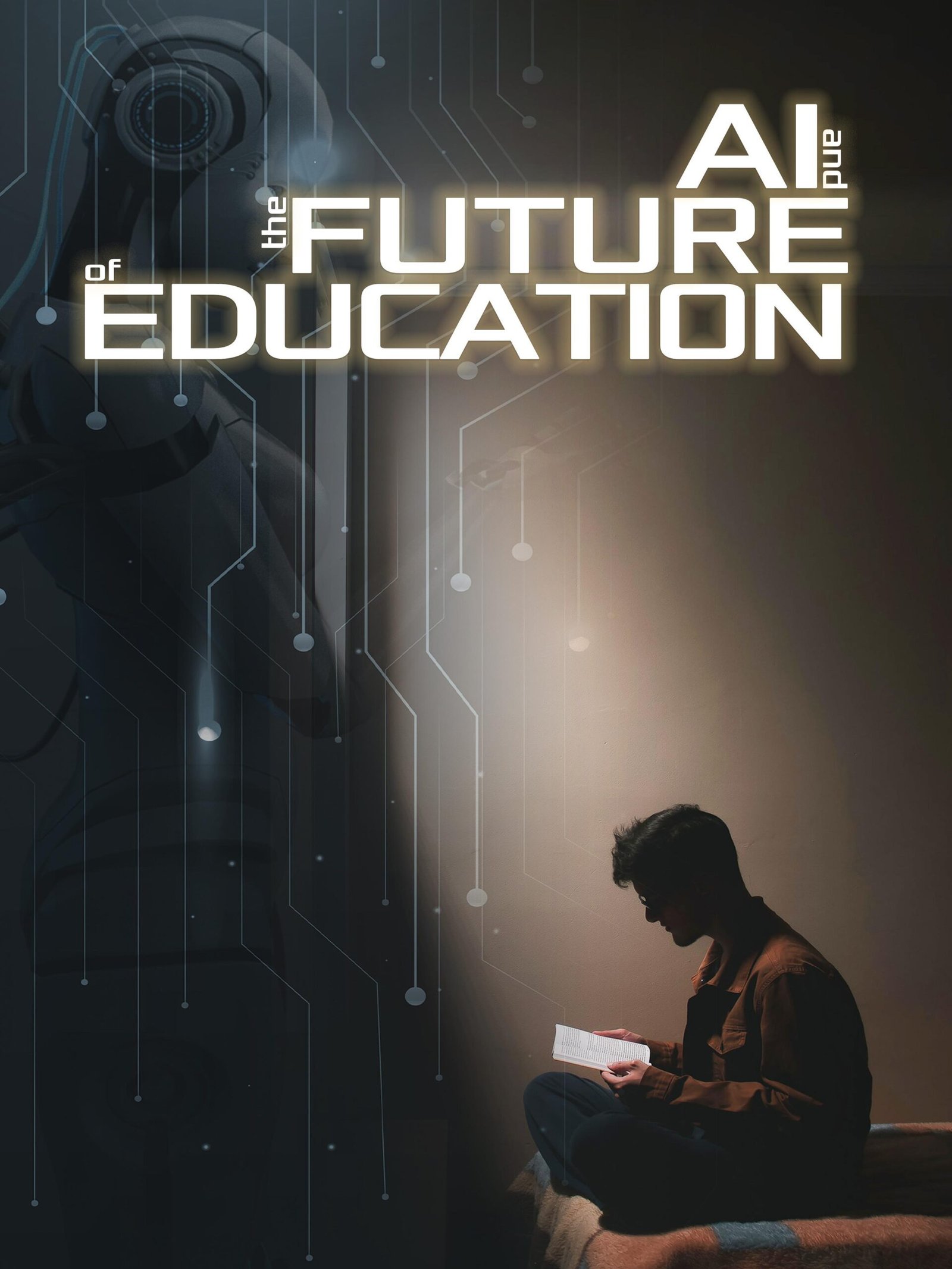
But artificial intelligence is quietly changing the meaning of intelligence itself.
Today, an AI model can:
- summarize textbooks,
- write essays,
- solve equations,
- generate presentations,
- explain concepts,
- and even simulate interviews

within seconds.
For the first time in history, information is no longer scarce.
And that changes everything.
The future may no longer belong to students who simply know the answers.
It may belong to those who know:
which questions still matter.
The Death of Memorization as Power

Traditional education rewarded:
- repetition,
- standardization,
- predictable thinking.
But AI thrives in structured environments.

Machines are becoming extremely good at:
- pattern recognition,
- retrieval,
- summarization,
- optimization.
Which means many skills once considered “high value” are rapidly becoming automated.
The competitive advantage of the future may not come from remembering information.
Because machines already remember better.
Instead, value shifts toward:

- interpretation,
- reasoning,
- adaptability,
- emotional intelligence,
- creativity,
- judgment.
The students who survive the AI era may not be the ones who compete with machines.
But the ones who think beyond them.
Intelligence Is Being Redefined
For decades, intelligence was measured through:
- marks,
- rankings,
- examinations,
- speed,
- accuracy.
But the AI era exposes a deeper truth:
Knowing facts is not the same as understanding reality.
A student may now use AI to:
- generate a perfect assignment,
- produce elegant code,
- write sophisticated answers.

But can they:
- defend the idea?
- question the assumptions?
- identify the flaws?
- connect it to human behavior?
- understand its consequences?
That is where human intelligence begins separating itself from machine intelligence.
The Most Dangerous Skill Is Blind Dependence

Every technological revolution creates convenience.
But convenience always carries a hidden cost.
Calculators reduced mental arithmetic.
GPS weakened navigation memory.
Social media shortened attention spans.

Now AI risks weakening:
- deep thinking,
- patience,
- curiosity,
- independent problem-solving.
When answers become instant, humans stop struggling with questions.
And sometimes, struggle is where understanding is born.
The danger is not that students will use AI.
The danger is that they may slowly stop thinking without it.
The Future Belongs to Cognitive Architects
The next generation of successful students may not simply become:
- engineers,
- coders,
- analysts,
- marketers.
They may become:
cognitive architects.
People who can:
- combine disciplines,
- think systemically,
- navigate ambiguity,
- make ethical decisions,
- and guide intelligent machines toward meaningful outcomes.

Because AI can generate information.
But humans still define:
- direction,
- values,
- purpose,
- meaning.
Creativity Becomes a Survival Skill

In the industrial era, repetition created value.
In the AI era, originality may create survival.
The students who stand out tomorrow may be those who can:
- think independently,
- connect unrelated ideas,
- communicate clearly,
- challenge existing assumptions,
- and create meaning in a world flooded with information.
AI can imitate patterns from the past.

But breakthrough thinking often comes from:
- contradiction,
- intuition,
- curiosity,
- lived experience.
The future may reward those who remain deeply human.
Education Must Evolve Beyond Exams
Many education systems still prepare students for a world that no longer exists.
A world where:
- memorization mattered more than imagination,
- obedience mattered more than experimentation,
- accuracy mattered more than originality.
But AI changes the economics of knowledge itself.
If information becomes free and infinite,
then education must focus on:
- thinking,
- decision-making,
- ethics,
- collaboration,
- communication,
- adaptability.

The schools and universities that understand this shift early may shape the next generation of leaders.
The rest may continue producing students optimized for yesterday’s economy.
Conclusion

Artificial intelligence is not the end of human intelligence.
It is the beginning of a new intellectual era.
An era where:
- information becomes abundant,
- execution becomes automated,
- and human judgment becomes rare.
The future may not belong to students who simply use AI.
It may belong to those who:
- question it,
- direct it,
- challenge it,
- and think beyond it.
Because in a world where machines can generate answers instantly,
the rarest ability may become: