

The Quiet Financial Shift Most People Haven’t Noticed

Most economic revolutions arrive quietly.
Not with headlines.
Not with sudden announcements.
But with subtle changes in how money moves.

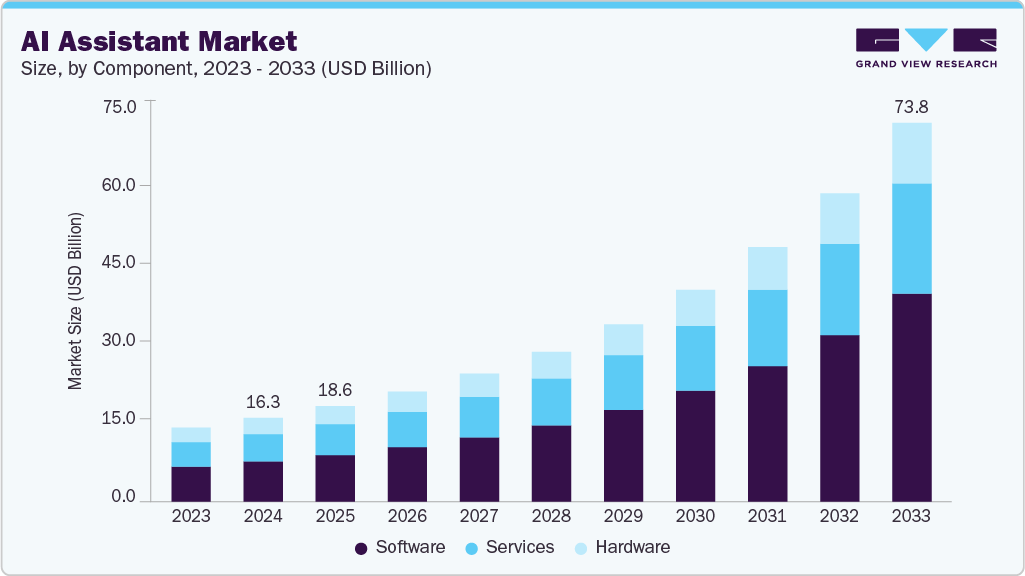
Right now, we are living through one of those moments. Artificial intelligence, automation, and digital platforms are quietly reshaping the structure of wealth creation. The systems running the global economy are becoming dramatically more efficient — but also dramatically more concentrated.

Which means fewer people may control a much larger portion of the financial upside.
And most people haven’t noticed yet.
AI Is Compressing Entire Teams Into One Person

For decades, scaling a business required hiring people.
More sales.
More engineers.
More analysts.
More support staff.
But AI is collapsing that structure.

Today, one skilled individual equipped with powerful tools can produce the output that once required entire departments. Designers are using generative tools to create in minutes what used to take weeks. Developers are accelerating code production with AI copilots. Marketers are automating campaigns that previously needed entire teams.
This is a massive productivity explosion.
But it also means wealth is concentrating faster.
Because fewer people are needed to create the same value.

The Entry-Level Ladder Is Quietly Disappearing

Historically, careers followed a predictable ladder.
Intern → Junior → Mid-level → Senior → Leadership.
Entry-level work was the training ground.

But AI is rapidly automating the very tasks that junior roles were designed to perform.
Research assistance.
Basic coding.
Data analysis.
Documentation.
Customer support.
These were the stepping stones.

Now many of them are being handled by algorithms.
This doesn’t mean work disappears — but the entry points into high-paying careers may shrink dramatically.
And that has massive implications for the next generation of workers.
Capital Is Becoming More Powerful Than Labor
For most of the 20th century, the path to financial security was simple.
Get a stable job.
Save consistently.
Invest slowly.

Eventually retire comfortably.
But technology is shifting the balance between labor and capital.
Those who control platforms, intellectual property, data, and automated systems can scale their income globally with minimal marginal cost.
Meanwhile, income tied purely to labor becomes harder to scale.
This doesn’t mean jobs vanish.
But it means wealth creation increasingly favors ownership over effort.
And that changes the rules of the financial game.

The Next Five Years May Be the Window

Major technological shifts always create a temporary window.
A period when opportunities are still accessible before the system stabilizes.
The early internet created billion-dollar companies.

The mobile revolution created entire new industries.
AI may be doing the same — but at a much faster speed.
For the next few years, the barriers to entry are still relatively low.

You can still learn the tools.
Still build assets.
Still participate in the upside.
But as these technologies mature, competition will intensify and access will become more expensive.
Which is why the next five years may be uniquely important.
The Strategic Moves Smart Earners Are Making

The people paying attention aren’t panicking.
They’re positioning.
They’re learning how to use AI tools to multiply their productivity.
They’re building digital assets — content, software, platforms, and communities that can scale globally.

They’re investing earlier in emerging technologies rather than waiting for markets to mature.
And most importantly, they’re shifting their mindset from earning income to building leverage.
Because in the new economy, leverage compounds faster than labor.
The Real Question Isn’t Whether AI Will Change the Economy

The real question is no longer whether AI will transform the economy.
It already is.
The deeper question is where individuals will position themselves in that transformation.
On the side creating and owning the new systems?
Or on the side competing for fewer opportunities inside them?
Because every major technological revolution reshapes wealth distribution.
And the people who recognize the shift early are usually the ones who benefit the most.

Final Thought
The next financial era is already unfolding.
Quietly.
Gradually.
But inevitably.

The next five years may not be the last opportunity to build wealth — but they may be the most accessible window before the new system fully stabilizes.
And in every technological revolution, positioning early has always mattered more than predicting perfectly.